
 By
By
Getting rid of heavy junk at home sounds simple at first. You look at an old couch, a broken fridge, or a pile of construction debris and think, “I’ll just move it out.”
Then you actually try lifting it.
That’s when reality hits.
Heavy junk removal is one of the most common ways people get injured at home. Back strain, cuts, dropped items, even damage to walls and floors. It adds up quickly, especially if you’re not prepared.
The good news is, most of these issues can be avoided with the right approach. This guide will walk you through practical, real-world safety tips so you can handle heavy junk without putting yourself at risk.
What Qualifies as Heavy Junk?
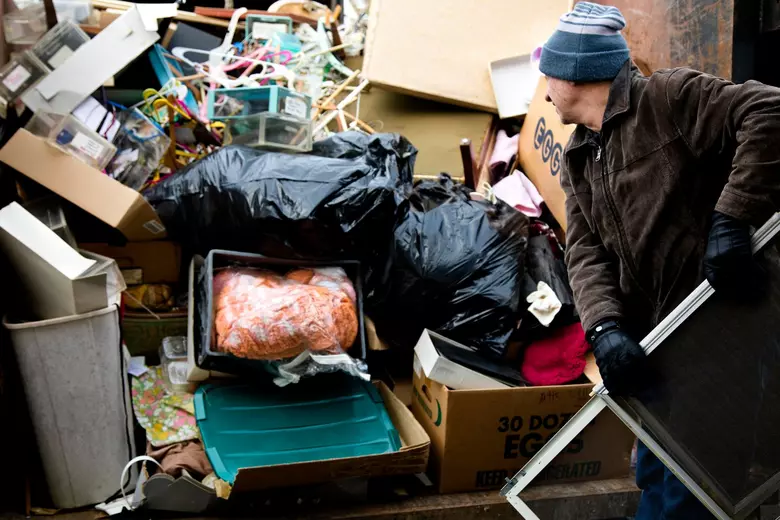
Not all junk is the same. Some items are easy to carry, while others require serious effort and planning.
Heavy junk usually includes:
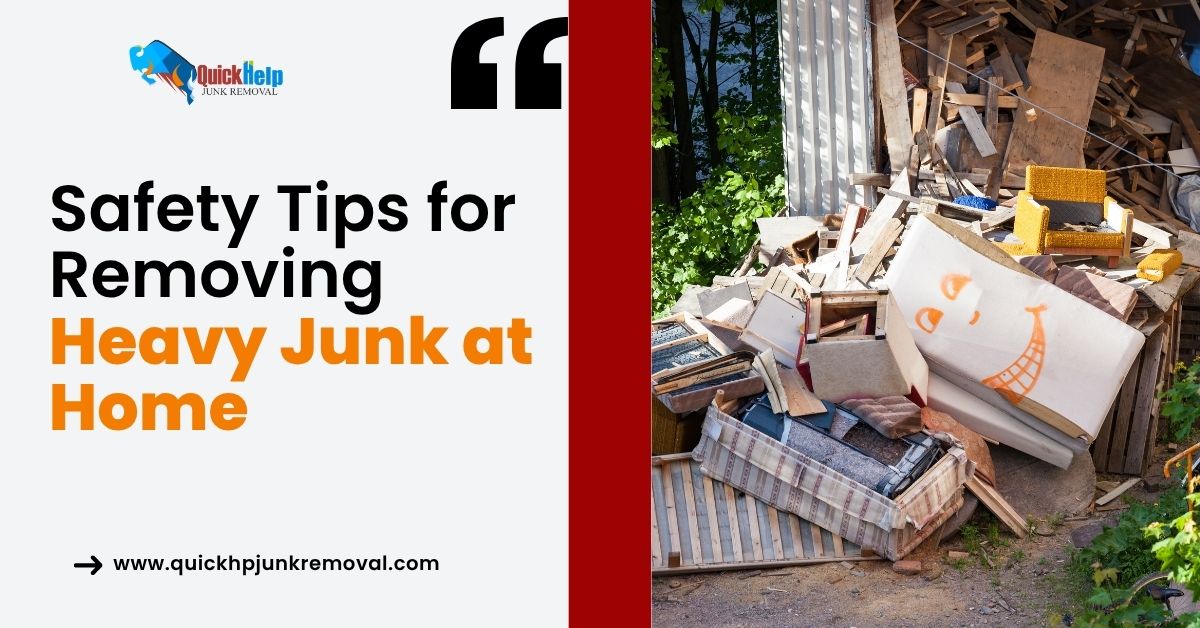
- Sofas and sectionals
- Refrigerators, washing machines, and dryers
- Mattresses and bed frames
- Large cabinets and wardrobes
- Office desks and solid wood furniture
- Construction debris like wood, drywall, or concrete
These items are not just heavy. They’re often bulky, awkward to grip, and difficult to maneuver through tight spaces.
Common Risks When Removing Heavy Junk

Before you start, it’s important to understand what can go wrong.
Back Injuries
This is the most common issue. Lifting incorrectly puts stress on your lower back, which can lead to long-term pain.
Slips and Falls
Loose debris, wet floors, or cluttered pathways can cause you to lose balance while carrying something heavy.
Dropped Items
Heavy objects can slip from your hands, damaging floors or injuring your feet.
Cuts and Scratches
Sharp edges, nails, or broken parts can easily cause injuries if you’re not careful.
Overexertion
Trying to do too much at once can lead to fatigue, which increases the risk of mistakes.
Plan Before You Lift
One of the biggest mistakes people make is jumping straight into lifting without thinking it through.
Assess the Item
Take a moment to understand what you’re dealing with:
- How heavy is it?
- Is it balanced or awkward?
- Does it have a good grip point?
If it looks difficult, it probably is.
Map Your Path
Before moving anything:
- Clear hallways and doorways
- Remove obstacles
- Measure tight spaces if needed
The last thing you want is getting stuck halfway through.
Get Help
If something feels too heavy, don’t try to prove anything. Just get help.
Two people can handle what one person struggles with. It also makes the process safer and faster.
Use Proper Lifting Techniques
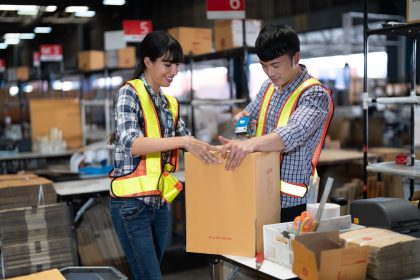
This is where most people go wrong. A few simple adjustments can make a huge difference.
Lift with Your Legs, Not Your Back
- Bend your knees
- Keep your back straight
- Push up with your legs
This reduces strain on your spine.
Keep the Load Close
Holding items close to your body gives you better control and reduces pressure on your back.
Avoid Twisting
Turning while carrying weight is risky. Instead:
- Move your feet
- Turn your whole body
Take Breaks
Don’t rush. If you’re tired, stop for a moment. Fatigue leads to mistakes.
Essential Safety Gear
You don’t need a full construction setup, but a few basic items help a lot.
- Gloves for better grip and protection
- Sturdy shoes to protect your feet
- Back support belt if you’re lifting frequently
- Protective eyewear for dusty or sharp materials
These small additions can prevent injuries.
Tools That Make Heavy Lifting Easier
Using the right tools can save you a lot of effort.
Dollies and Hand Trucks
Perfect for moving appliances and large furniture without carrying them.
Furniture Sliders
Great for moving items across floors without scratching surfaces.
Lifting Straps
Help distribute weight evenly and reduce strain.
Ramps
If you’re loading items into a truck or dumpster, ramps make the process much easier and safer.
How to Move Heavy Items Safely Indoors
Indoor spaces come with their own challenges.
- Protect floors with mats or cardboard
- Watch corners and walls to avoid damage
- Move slowly through tight spaces
- Communicate clearly if you’re working with someone
Taking your time here prevents costly repairs.
Safe Outdoor Removal and Loading
Once items are outside, you still need to be careful.
- Lift items properly into trucks or dumpsters
- Don’t overload beyond what you can control
- Stack items securely to prevent shifting
If items move during transport, it can create serious hazards.
Handling Special Items with Extra Care

Some items need additional attention.
Appliances
- Disconnect power, water, or gas safely
- Be careful with older units that may contain hazardous materials
Glass and Fragile Materials
- Wrap them properly
- Handle slowly to avoid breakage
Construction Debris
- Watch for nails and sharp edges
- Use gloves at all times
Common Mistakes to Avoid
Even small mistakes can cause problems.
- Trying to lift too much alone
- Rushing through the process
- Ignoring proper lifting techniques
- Skipping tools that make the job easier
Taking a few extra minutes to do things right saves you a lot of trouble.
When to Call a Professional Junk Removal Service

Sometimes, the safest option is to not do it yourself.
You should consider hiring professionals if:
- Items are extremely heavy or bulky
- You don’t have the right equipment
- There are stairs or tight spaces involved
- You want the job done quickly
Instead of risking injury, it’s often better to let experienced teams handle it.
What Professionals Do Differently
Professional junk removal teams are trained for this kind of work.
They:
- Use proper lifting techniques
- Bring the right equipment
- Work efficiently as a team
- Handle disposal correctly
This reduces both risk and time.
Cost vs Risk: Is DIY Worth It?

At first, doing it yourself seems like the cheaper option.
But when you consider:
- Your time
- Physical effort
- Risk of injury
- Potential damage to your home
Hiring professionals often makes more sense.
One injury or repair can cost far more than a removal service.
Tips to Make Heavy Junk Removal Easier
Here are a few simple ways to make the process smoother:
- Break items into smaller pieces when possible
- Remove drawers or detachable parts
- Plan your route before lifting
- Work with a partner
- Use tools instead of relying on strength alone
These small steps add up.
Removing heavy junk at home isn’t just about strength. It’s about doing things the right way.
Take your time, plan ahead, and don’t push yourself beyond your limits. A safe approach not only protects you but also makes the entire process much easier.
At Quick Help Junk Removal, we help homeowners across Buffalo safely remove heavy items without the stress.
Whether it’s a single couch or a full property cleanout, our team is equipped to handle the job quickly and professionally.
✔ Safe and efficient removal
✔ Experienced team
✔ Same-day and next-day service
✔ Responsible disposal
No risk. No heavy lifting on your side. Just a clean, clear space.
👉 Visit: https://quickhpjunkremoval.com/
📞 Contact us today for a free estimate and let’s get it done the easy way.